
Art Scene / Tbilisi / artist
Gela Mikava
For Gela Mikava, a painting begins long before the first brushstroke. It begins with a material that has already lived another life, carrying traces of domestic spaces, changing histories and the people who once inhabited them.
What remains in the materials we inherit
Born in Zugdidi to a family displaced from Abkhazia, Mikava grew up beneath a ceiling made from biazi, a cotton fabric commonly used in Soviet-era homes. Rainwater gradually marked its surface, leaving stains in which he and his brother discovered unexpected images. Years later, the same material would become central to his artistic practice.
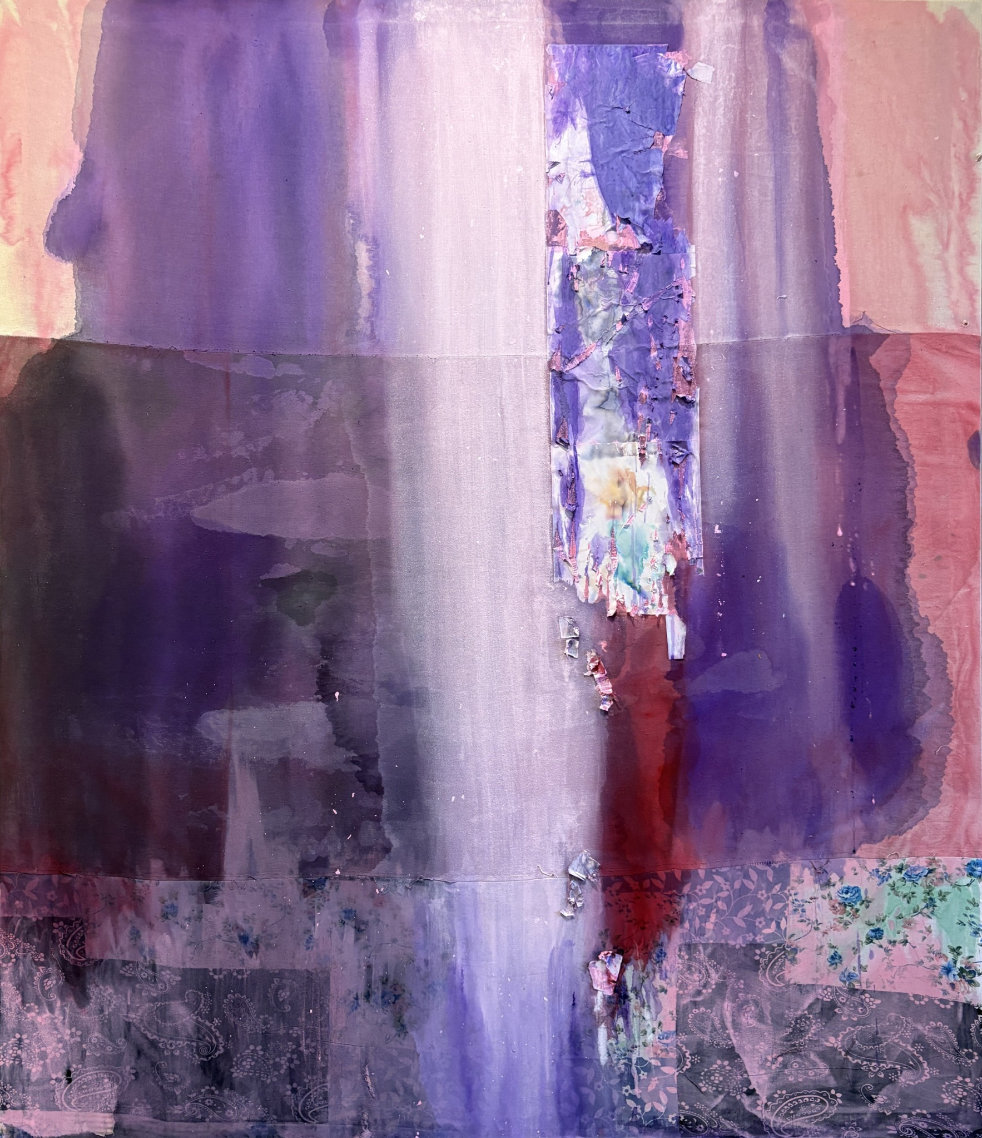
What distinguishes Mikava’s work is his refusal to treat these traces as imperfections to be concealed. Fragments of paper, accumulated stains and worn surfaces become part of the composition itself. His paintings bring together personal memory and a wider historical inheritance, allowing the material to retain its own history.
Now based in Tbilisi, where he works as both an artist and architect, Mikava explores what survives through generations, from the physical remnants of the past to the gestures and experiences we pass on to our children.
A Childhood Beneath a Painted Ceiling
Gela Mikava was born in Zugdidi in 1995, three years after his family fled the war in Abkhazia. His earliest home had a ceiling made from biazi, a cotton fabric stretched across the surface, covered with paper and painted white. As rainwater seeped through the ageing roof, stains began to appear. He and his brother found shapes and imagined pictures within them.
When he began art school in 2002, prepared canvases were difficult to obtain. His father, who worked renovating homes, brought back discarded biazi. The family washed it, removed the old paper and prepared it for painting. What began as a practical solution eventually became the foundation of Mikava’s artistic language.
Rather than covering the fabric’s history, he began preserving its stains, worn surfaces and fragments. The material was no longer simply a support for painting. It had become part of the work itself.
Finding a Place in Tbilisi
In 2014, Mikava moved to Tbilisi to study architecture at Georgian Technical University, where he later completed his master’s degree. He moved between rented apartments, encountering different neighbourhoods and different layers of the city. His architectural training sharpened his attention to the relationship between buildings, their surfaces and the histories they preserve.
At the university, he noticed how renovations transformed interiors while the exterior remained largely unchanged. For him, this contrast echoed the persistence of the Soviet past within contemporary Georgian life.
The Gestures We Inherit
Today, Mikava’s studio is part of his home, where his young son, Tite, often draws alongside him. Their shared creative space has become the starting point for a deeply personal exploration of how childhood expression is shaped by the adult world.
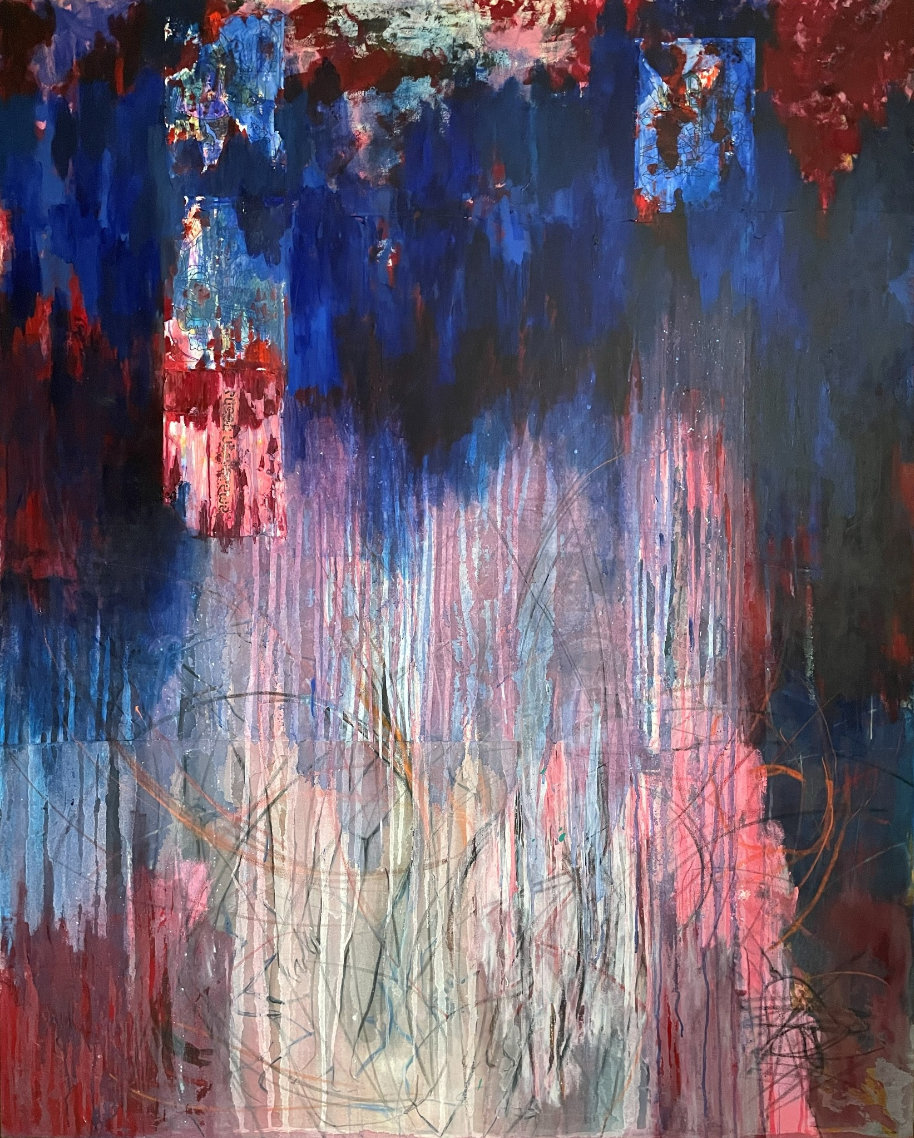
In his series What Remains of Gesture, Mikava incorporates Tite’s drawings into reclaimed biazi, then covers, tears and alters them. He describes himself as the censor of that innocence, recognising how even a loving parent can intervene in a child’s spontaneous gestures. The work raises a wider question about the systems and expectations that shape what we are allowed to express.
A City of Personal and Political Memory
For Mikava, Tbilisi is inseparable from its political and everyday life. Asked where he would take a visitor, he names the area outside Parliament, a place of ongoing public struggle, alongside his own studio and the neighbourhood park where he walks with Tite. These places reveal different dimensions of the city: collective resistance, private creation and family life.
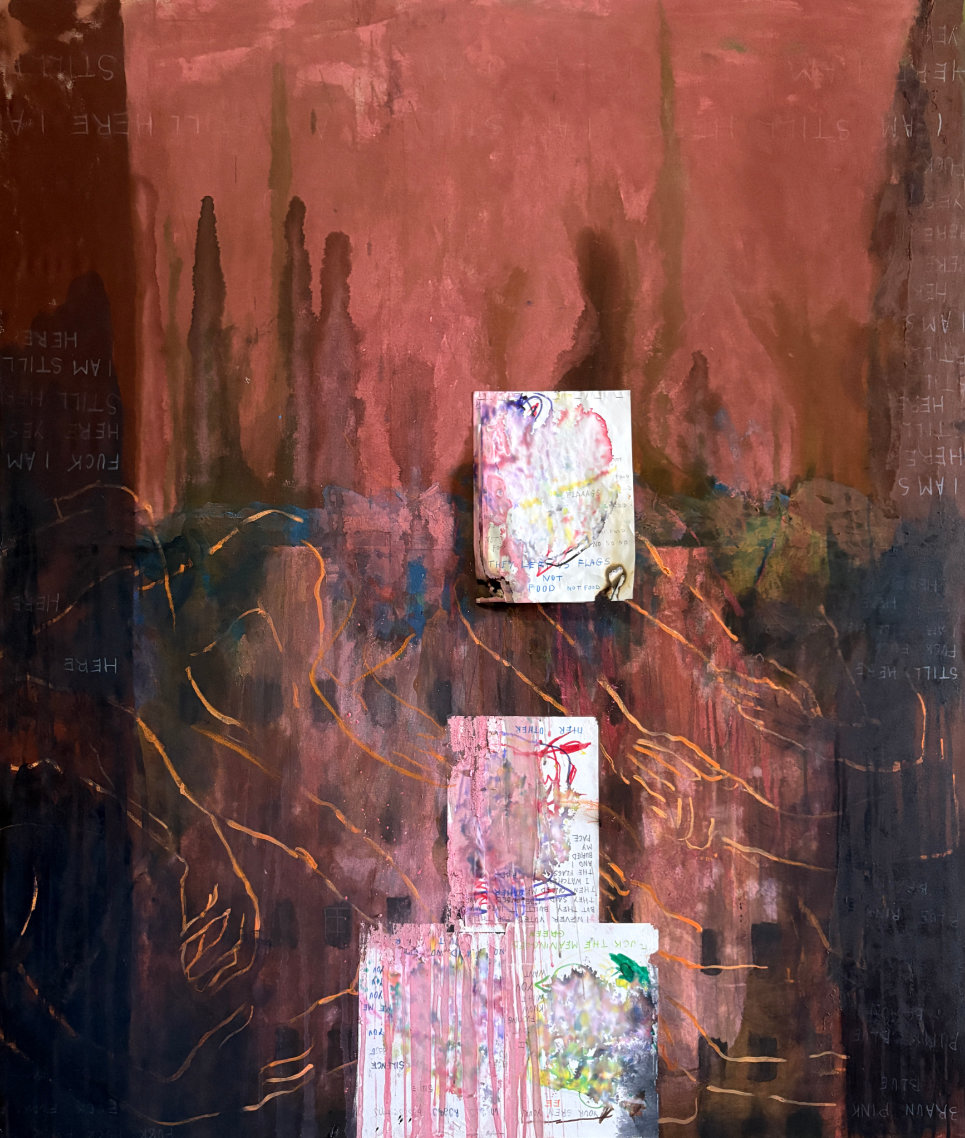
One memory reaches further back. His grandmother often said, “They gave us flags, but no food.” The words stayed with him as an expression of the distance between political promises and ordinary needs. In They Left Us Flags, fragments of text, paint and figures bring that memory into the present. Through the work, a voice from his childhood becomes part of a wider reflection on history and power.
Looking Ahead
Mikava describes making art as an internal necessity, sustained by experimentation with materials and the search for a visual language of his own. Yet he also recognises the importance of professional continuity, independent curators, critical dialogue, residencies and institutions that can support artists beyond individual exhibitions.
His hope for Tbilisi is not simply greater international visibility. It is for artists to participate in wider conversations without abandoning the experiences that shape their work or adapting their identities to outside expectations. In his own practice, the materials of Georgian domestic life already carry those conversations, connecting personal memory with questions that extend far beyond the city.
Continue exploring
More from Tbilisi →