
Art Scene / Tbilisi / artist
Maka Zedelashvili
Maka Zedelashvili began painting as a small child in Tbilisi. Today, her work moves between painting, installation and digital media, exploring women's experiences, inherited traditions and the changing life of her city.
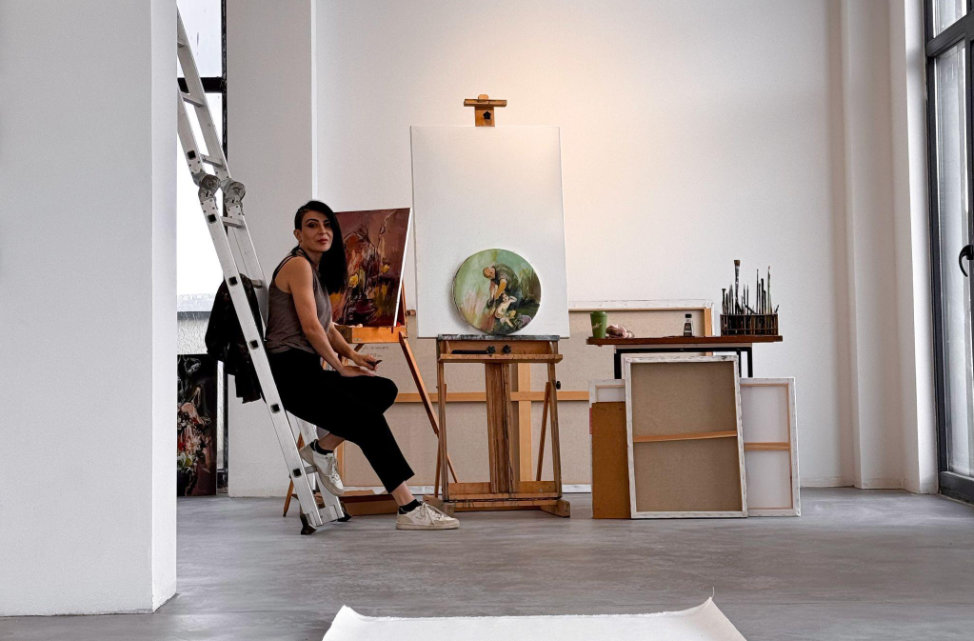
Maka Zedelashvili
Photo: Tornike Chkhvimiani
A Childhood Covered in Paint
Maka Zedelashvili was around three years old when she began painting. She was already telling her family that she wanted to study at the Academy of Arts, even though she could not yet remember its name. Her mother would remind her.
“My grandmother would sometimes complain when I covered the house with paint, while my mother always supported me and made sure I had the materials I needed.”
It is an affectionate memory of a childhood in which art was already becoming part of everyday life. Nobody in her family worked professionally in the arts, but her mother's encouragement allowed that early fascination to grow.
Today, painting remains central to Zedelashvili's practice, although her work extends into drawing, installation and digital media. Her subjects often emerge from the relationship between personal experience and the world around her: women's lives, inherited traditions, religious beliefs and the changing social realities of Georgia.
Tbilisi is an important part of that relationship. It is the city in which she works, observes and responds to contemporary life. Its old courtyards, changing architecture and social contradictions offer a constant reminder that cultural identity is never entirely fixed.
A Painter Beyond a Single Language
“I consider myself, first and foremost, a painter.”
It is a straightforward declaration from an artist whose practice has become increasingly varied. Although painting remains her closest artistic language, Zedelashvili has spent years exploring drawing, installation and digital technologies, particularly following her master's degree.
She does not begin with a medium and then search for something to express through it. Her research and the questions she wants to investigate determine the form of each project. Some ideas remain on canvas. Others demand space, movement or interaction with the viewer.
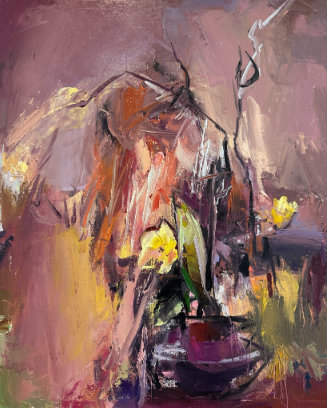
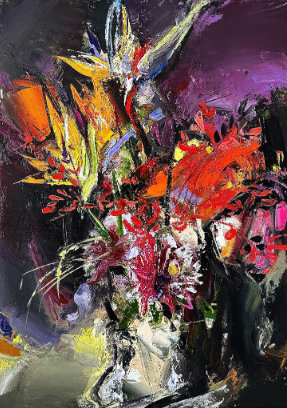
This flexibility is visible across her paintings. In Flowers and Still Life, energetic brushwork and overlapping colours create compositions that feel restless and alive. These works reveal a painter interested not only in subject matter, but in the expressive possibilities of paint itself.
A City That Changes Around Its Artists
For Maka Zedelashvili, Tbilisi is not simply where she works. Its streets, people and changing social atmosphere are part of the material from which her ideas emerge.
She is attentive to the city's contradictions. Historic courtyards exist alongside contemporary architecture, while inherited traditions meet the pressures of modern life. These tensions interest her as both an artist and someone experiencing the city every day.
One change particularly affected her: the demolition of the Rike Tubes in Rike Park, designed by Italian architect Massimiliano Fuksas. Zedelashvili admired the buildings for their bold contemporary character. While much of Tbilisi's identity is associated with its historical architecture, she believes that ambitious modern buildings also deserve a place in the city's story.
“Their loss also takes something away from Tbilisi's contemporary architectural landscape.”
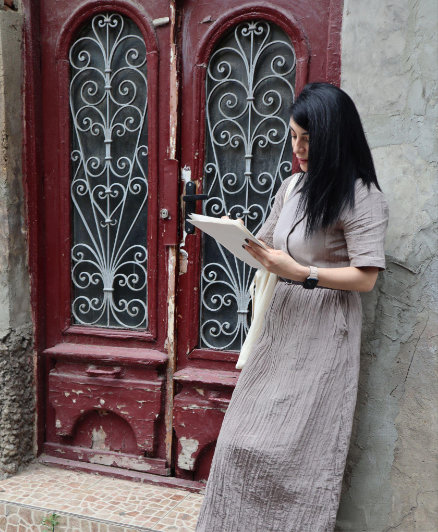
Photo: Izik Levy
Her response reveals something important about her artistic outlook. She values cultural inheritance, but does not believe that a city's identity should be confined to its past.
When asked where visitors should go, she recommends Window Project, Baia Gallery and several of the city's museums. But her most personal recommendation is simpler: wander through Old Tbilisi without a fixed destination. For an artist who has spent much of her life observing people and small details, the streets themselves remain a place of discovery.
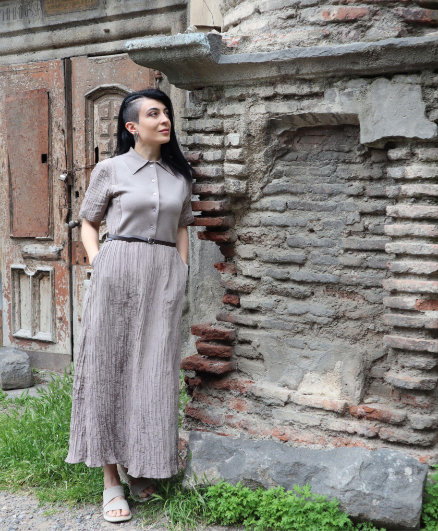
Photo: Izik Levy
The Invisible Weight of Tradition
In Georgia, traditions are not confined to museums or historical accounts. They remain present in family life, religious practices and the expectations that shape everyday behaviour. For Maka Zedelashvili, these inherited structures raise particularly important questions about women's lives.
She spent several years developing a series concerned with women's rights, culminating in an exhibition at the Tbilisi Museum of Literature. The subject remains central to her practice, particularly in projects such as Prompt and Weavers of Fate.
Her work considers how social roles are established, passed between generations and sometimes accepted without question. Georgian pre-Christian beliefs and religious traditions form part of the wider cultural landscape she examines. There is an interesting tension in her approach. She is drawn to the richness of inherited culture while questioning the expectations that can accompany it.
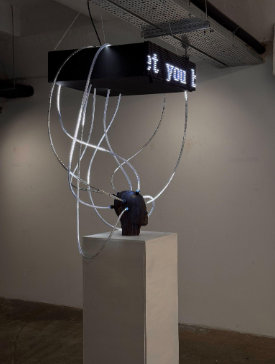
In Weavers of Fate, the human figure appears through delicate, intricate lines. The drawings offer a more intimate visual language than the energetic brushwork of her larger paintings. Their fragility contrasts with the weight of the social questions behind them.
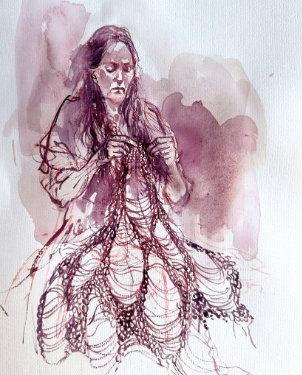
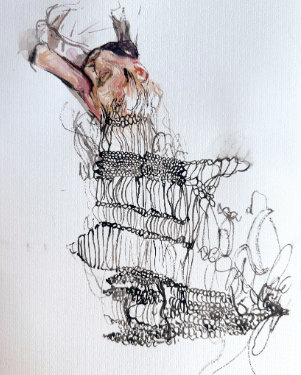
Zedelashvili does not approach these subjects as problems with simple solutions. Her intention is to open a space for reflection, allowing viewers to recognise connections with their own experiences.
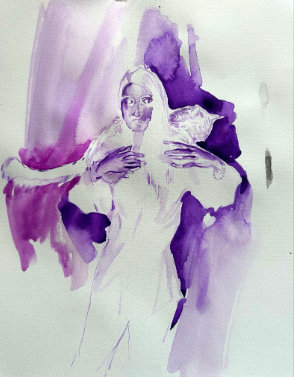
Echo of the Fall
Some artworks begin with an observation of the outside world. Others emerge from moments when an artist's own life changes direction. For Zedelashvili, Echo of the Fall belongs to the second category.
The series grew from difficult personal experiences, although she does not describe it simply as an expression of suffering. Instead, she became interested in the different meanings of falling: crisis, loss of certainty, liberation and the possibility of beginning again.
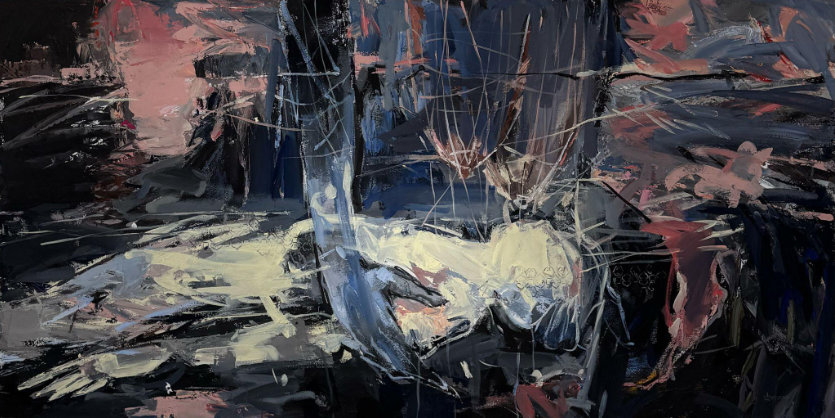
In The Fall: Horizon (2025), sweeping, fragmented brushstrokes create a restless composition. Light and dark areas compete across the canvas, giving the painting a sense of movement rather than stillness.
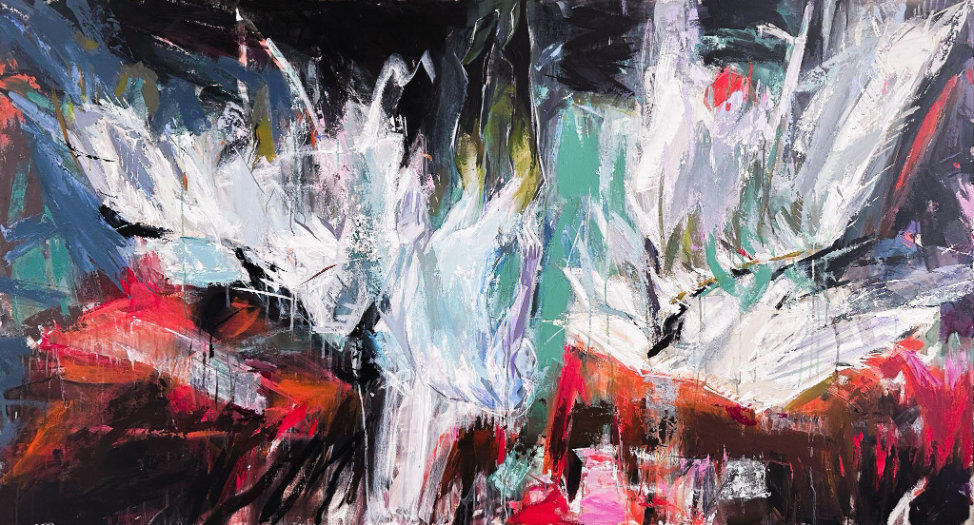
Zedelashvili's explanation introduces an unexpected dimension. She became interested in the neutrino, a particle capable of travelling through matter with very little interaction, and used it alongside the image of a ray of light as a metaphor for continuity. For her, what appears to disappear may instead be changing form.
The idea carries a spiritual dimension, but the series remains grounded in human experience. She hopes that viewers encountering the work will recognise something of their own moments of uncertainty and change. Rather than presenting falling as defeat, Zedelashvili leaves open the possibility that it can also be a beginning.
The Freedom to Experiment
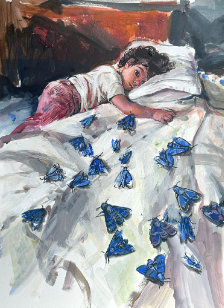
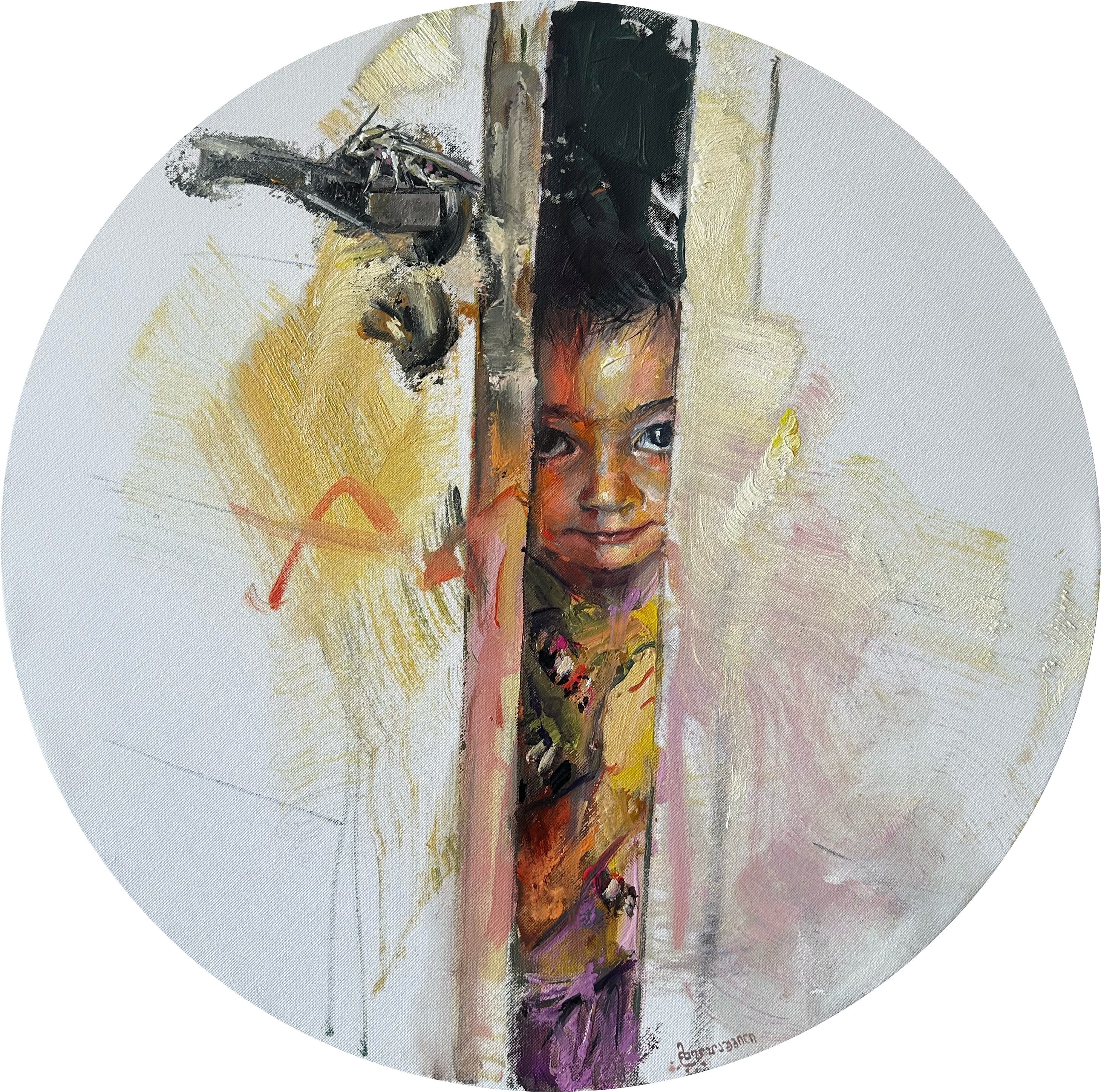
In her recent paintings, Zedelashvili moves between different subjects, materials and formats. Composition and Noon sit alongside the more intimate Night Butterflies and Butterfly, revealing the range of her painterly interests.
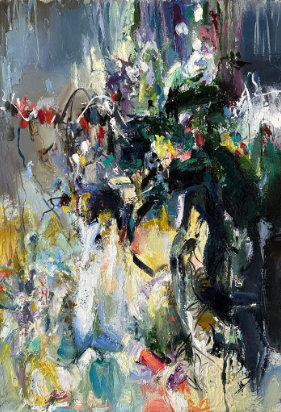
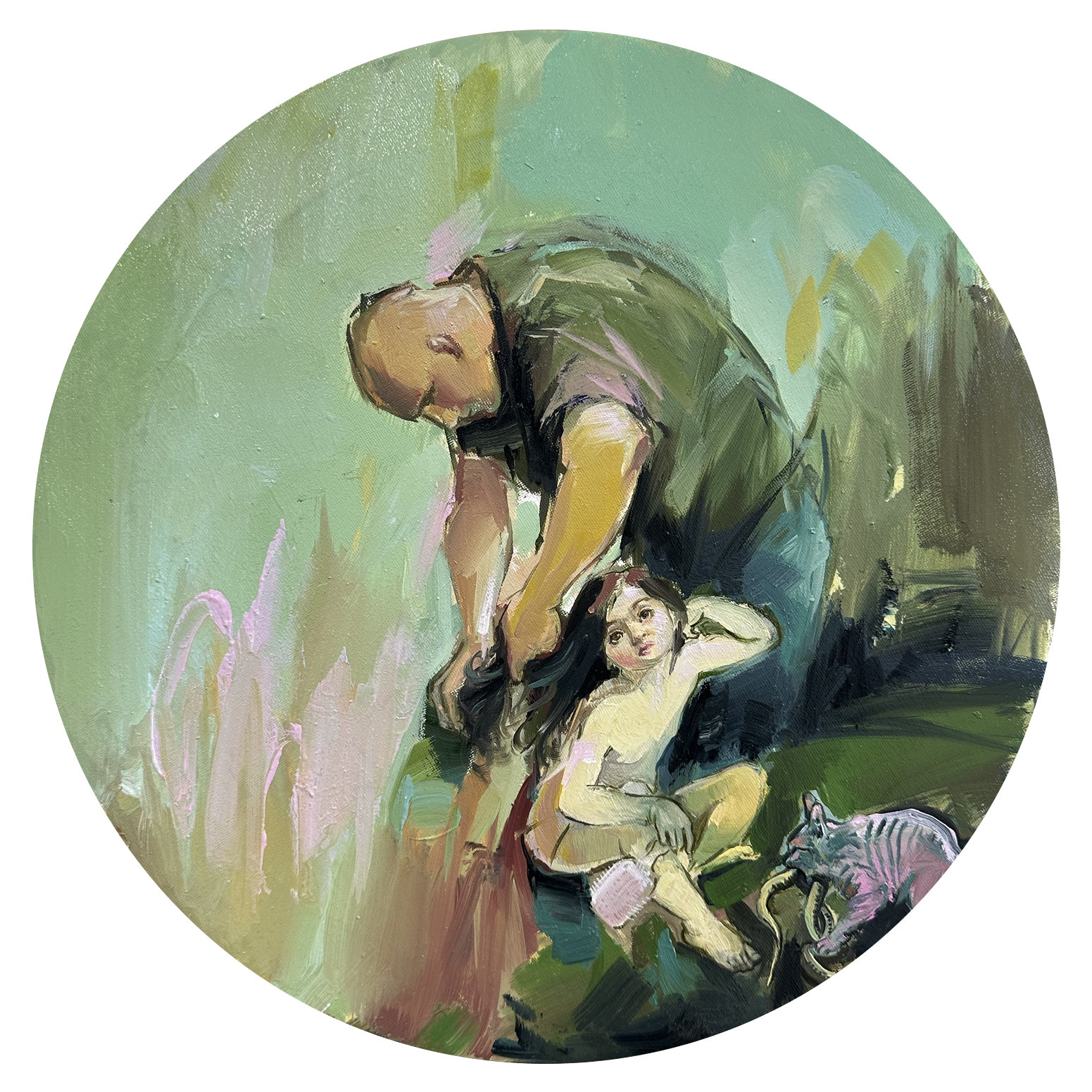
These works offer another perspective on an artist whose curiosity has remained central to her practice since childhood.
A Studio Becoming a Meeting Place
Maka Zedelashvili's day begins early. Before she enters the studio, there are the ordinary responsibilities of family life. As a mother and an artist, she moves between two different rhythms.
The studio gives her time to return to her own thoughts. Some days are devoted to painting; others to reading, research and experimentation. She describes it as a place where the creative process helps her recover a sense of inner balance.
Now she is imagining a different future for this space. Her ambition is to develop it into a studio, gallery and creative hub, hosting exhibitions, workshops and international cultural gatherings. She hopes to connect artists from different generations and countries, bringing new conversations into Tbilisi's cultural life.
For an artist who began by covering her family home with paint, the idea of creating a space where others can make and exchange ideas feels like a fitting next chapter.
“I want it to become a meeting point for people and ideas.”
Continue exploring
More from Tbilisi →